

27 Apr Skid Tank Management System
Real Time Fuel Tracking
Consistently accurate fuel data in real-time
Measure fuel volume at defined intervals and transmit data via telematics devices—providing real-time visibility into inventory across all sites without relying on manual tracking checks.
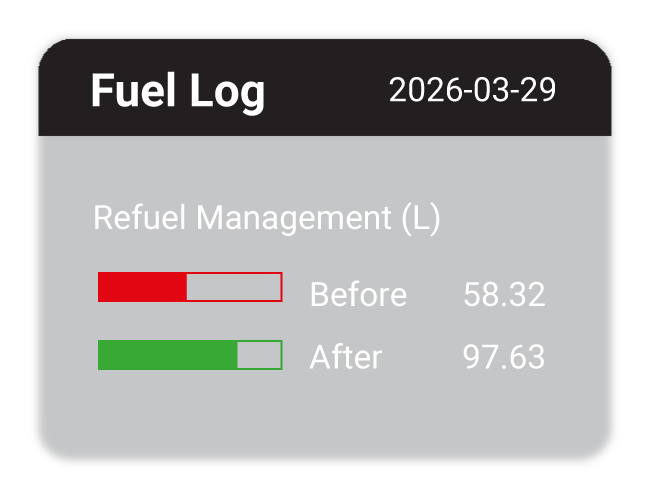
Continuous tank-level monitoring


Capture fuel volume across time intervals using calibrated sensor readings
Telematics data transmission
Stream tank data to a centralized platform via GPS/IoT connectivity
Real-time inventory analytics
Track fuel levels, refill events, and consumption trends across locations
Tank-level vs dispensing validation
Compare recorded transactions with sensor-detected volume changes
Timestamped reconciliation logic
Align fuel activity with time, location, and operational context
Audit-ready transaction records
Maintain traceable, editable logs for verification and reporting
Real-time fuel drop detection
Identify abnormal level changes during idle or non-operational periods
Gradual loss identification
Detect slow leaks or unaccounted shrinkage across time intervals
Behavior-based anomaly analysis
Correlate fuel activity with operational patterns and timestamps
Geofenced refueling zones
Trigger alerts when dispensing occurs outside approved locations
Location-based activity tracking
Associate every fuel event with a verified site or project location
Mobile tank monitoring
Maintain visibility over portable skid tanks across remote operations
RFID-enabled dispensing control
Restrict fuel access to authorized personnel only
User-linked fuel records
Attribute every transaction to a driver, operator, or staff ID
Tamper-resistant digital logs
Automatically record all activity for audit and compliance
Frequently asked questions
What is a skid tank fuel management system?
A skid tank fuel management system is a sensor-driven solution designed to monitor, validate, and control fuel stored in bulk tanks across operational sites.
It combines fuel level sensors, telematics connectivity, and access control mechanisms to track tank inventory, record dispensing activity, and verify fuel movement in real time.
Unlike manual tracking or basic monitoring tools, the system ensures that every fuel transaction is:
- Measured through continuous tank-level monitoring
- Validated against actual volume changes
- Recorded with time, location, and user attribution
This provides a structured, audit-ready view of fuel inventory and usage across all sites.
How does the system detect fuel loss or theft?
The system detects fuel loss by continuously comparing tank-level data over time and identifying irregular patterns that deviate from expected usage. This includes:
- Sudden fuel drops: Detected in real time when tank levels decrease without a corresponding authorized dispensing event
- Gradual shrinkage: Identified through time-based analysis of small, continuous losses
- Unverified transactions: Flagged when recorded fuel usage does not match actual tank-level changes
By combining sensor data with timestamped validation logic, the system allows operators to investigate discrepancies early—before losses escalate.
How does SafeConnect ensure fuel accuracy and accountability?
SafeConnect ensures fuel accuracy by validating every recorded transaction against physical tank movement—eliminating reliance on manual logs or assumptions.
Each fuel event is:
- Captured through calibrated tank-level sensors
- Cross-validated against dispensing records and volume changes
- Linked to a verified user through RFID or access control
- Logged with timestamp and location data for traceability
This creates a fully accountable system where every litre can be traced back to:
who accessed it, when it was dispensed, and where it occurred.
How quickly can discrepancies be detected?
Fuel discrepancies are detected in near real time as tank-level data is continuously monitored and analyzed.
Alerts can be triggered immediately when predefined conditions are met, such as:
- Abnormal fuel drops
- Unauthorized access
- Dispensing outside approved zones
This allows operators to respond quickly and minimize potential losses or operational disruptions.

Sorry, the comment form is closed at this time.