

27 Apr Trailer Management
Real-Time Asset Visibility
Improve dispatch efficiency and eliminate trailer search time.
Centralize trailer location, movement, and on-site status into a single
operational view—enabling faster dispatch decisions, reduced idle time,
and real-time coordination across yards and routes.
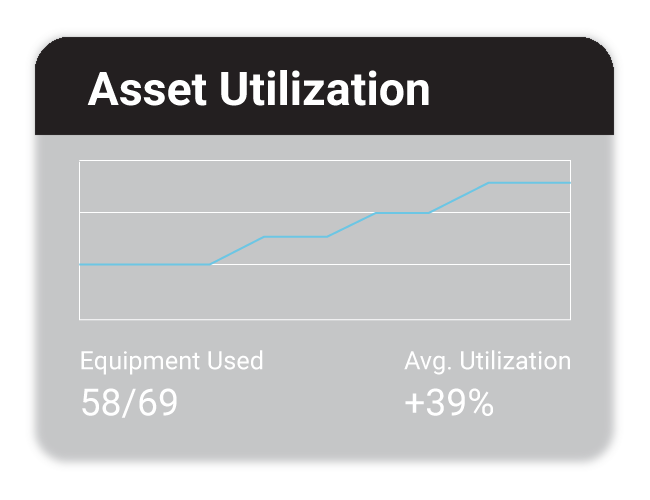
Live asset tracking
Monitor trailer movement across routes, yards, and customer sites
Geofence visibility
Capture entry, exit, and dwell activity automatically
Unified asset view
Align tractors, trailers, and cargo in one operational layer
Utilization & Dwell Time Optimization
Quickly catch theft or unauthorized use.
Understand how trailers are used across locations, routes, and time.
Monitor dwell and inactivity to improve asset turnover, optimize deployment,
and reduce unnecessary fleet expansion.
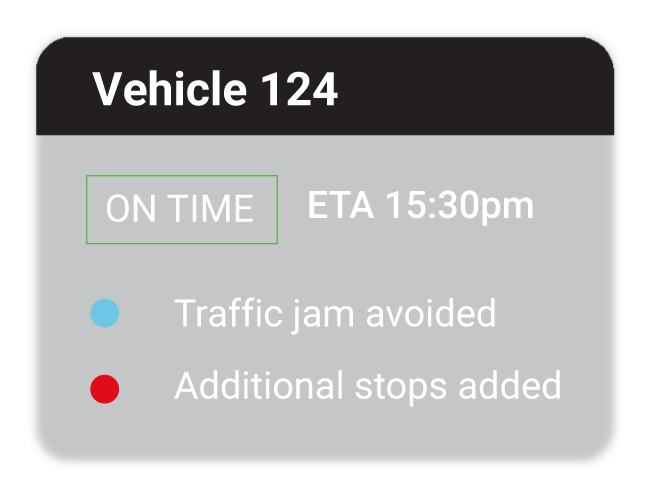
Idle vs movement analysis
Identify underutilized trailers across operations
Geofence-based dwell tracking
Measure time spent at depots, yards, and delivery points
Asset availability visibility
Track which trailers are active, idle, or ready for dispatch
Digital Maintenance Records
Maintain structured logs for inspections and repairs.
Capacity Optimization
Manage trailer weight and volume to ensure peak trip efficiency.
Tire Health Monitoring
Track tire maintenance to prevent roadside failures and delays.
Automatic trailer identification
Capture in-yard and outbound movement without manual input
Real-time dispatch visibility
Track which trailers are deployed, available, or in transit
Inventory accuracy control
Reduce mismatches and errors in tracking and yard management
How does RFID Asset Tracking Work?
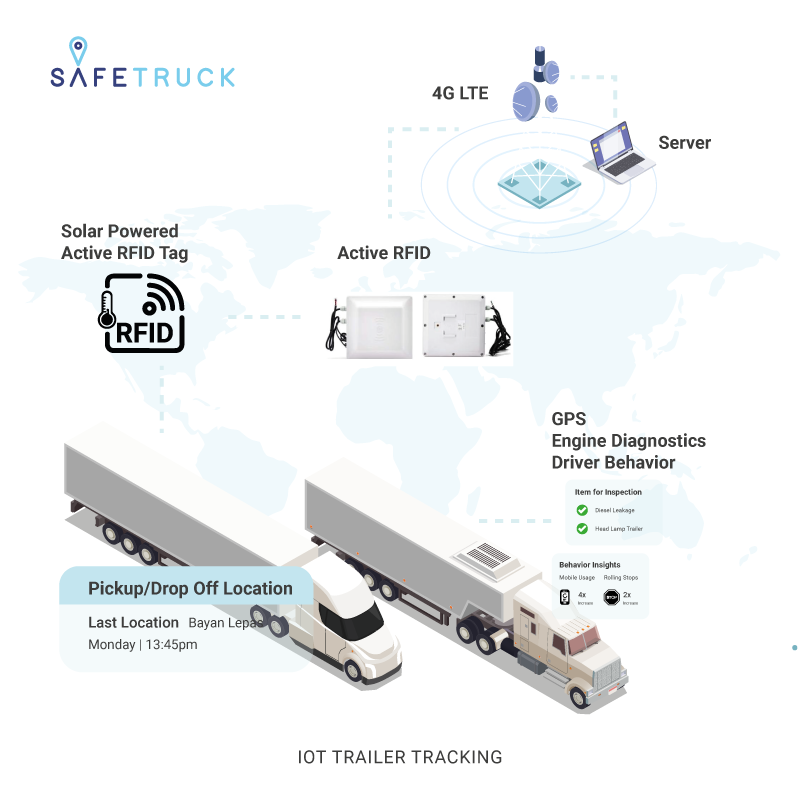
Businesses face a critical challenge in streamlining asset management, where time spent searching for equipment can result in costly delays and inefficient resource allocation. Utilizing radio frequency identification (RFID) technology provides an efficient solution, automatically tracking assets through electromagnetic fields and enabling real-time, accurate tracking for both fixed and mobile assets.
How Does RFID Asset Tracking Work?
Exploring RFID Tags: Active vs. Passive
Understanding Passive RFID Tags
The Mechanism of Passive RFID Tags
Applications of Passive RFID Tags
Active RFID Tags: An Overview
Applications of Active RFID Tags
Streamlining Asset Tracking with RFID
By incorporating portable RFID readers into mobile computers, staff can easily scan asset tags without direct visibility, enabling efficient inventory processes. RFID tags with larger memory capacity store additional asset information, facilitating maintenance activities and sensor data storage, even in remote areas. Advantages of RFID asset tracking over barcoding include simultaneous reading of multiple tags, integration with sensors and GPS technology for asset condition data, and enhanced security with real-time alerts. RFID reduces tracking times, increases productivity, and streamlines asset management for cost-effectiveness.
Frequently asked questions
What features should I look for in a trailer management?
Some key features to look for in a trailer management include real-time location tracking and alerts, cargo monitoring and temperature control, maintenance scheduling and tracking, load optimization, and detailed reporting and analytics.
How much does a trailer management system cost?
The cost of a trailer management can vary depending on the features and capabilities of the system, as well as the size and needs of the organization using it. Some systems may charge a monthly or annual subscription fee, while others may offer a one-time purchase price.
What are the benefits of using a trailer management system?
Using a trailer management can help businesses improve security and reduce the risk of theft, increase efficiency and utilization, reduce trailer idle time, and proactively manage maintenance needs to prevent breakdowns and downtime.
What are the benefits of using Active RFID with GPS?
Enhanced asset tracking accuracy, real-time monitoring, improved security, and increased efficiency in managing assets and inventory.
What is Active RFID with GPS?
A tracking system combining active RFID technology and GPS for real-time monitoring of assets transmitting signals and GPS coordinates to a central system.
How accurate is the location data provided by Active RFID with GPS?
It offers highly accurate location data through a combination of RFID and GPS, enabling real-time tracking for precise asset monitoring.
Is it possible to integrate Active RFID with GPS into existing systems?
Active RFID with GPS can be integrated with existing systems, providing seamless data transfer and improving asset tracking and management efficiency.
How can implementing Active RFID with GPS result in potential cost savings?
Implementing Active RFID with GPS can lead to significant cost savings by optimizing asset utilization, reducing theft and loss, minimizing downtime, and streamlining inventory management.


Sorry, the comment form is closed at this time.