

27 Apr Electric Vehicles
Battery Health Monitoring
Protect battery performance and plan for long-term fleet reliability
Track battery degradation, charging cycles, and energy consumption in real time—so you can identify inefficiencies early, reduce unexpected downtime, and plan maintenance before performance is impacted.
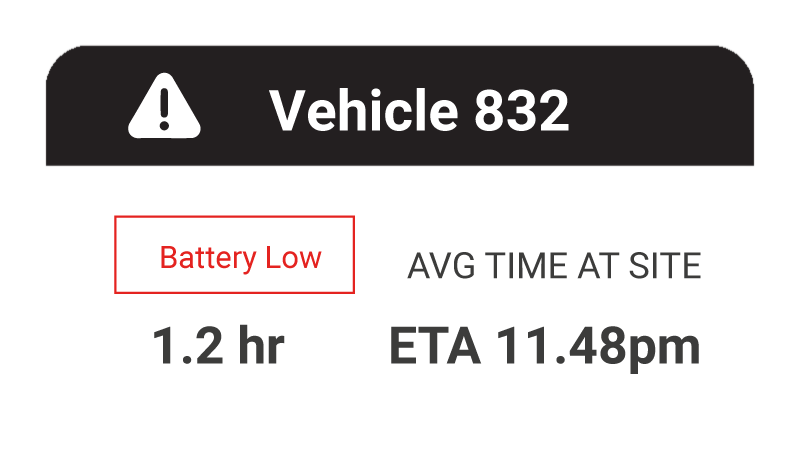
Battery condition tracking


Monitor degradation trends and charging cycles across vehicles
Energy usage analysis
Track consumption across trips, routes, and driving patterns
Performance alerts
Detect abnormal conditions that impact battery lifespan
Range Intelligence Planning
Plan every trip with confidence using real-time range visibility
Combine real-time telematics data with vehicle usage patterns to estimate available range under actual operating conditions—ensuring vehicles are only assigned to routes they can complete.
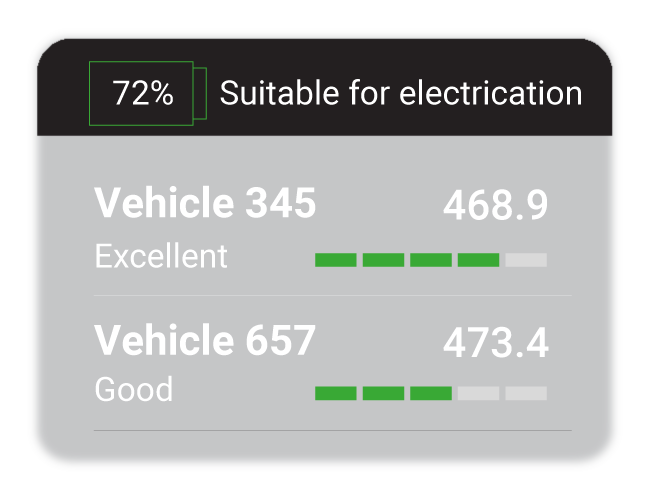
Dynamic range estimation
Calculate usable range based on load, terrain, traffic and driving behavior
Pre-trip validation
Confirm route feasibility before dispatch to reduce mid-route disruptions
Route-aware planning
Optimize routes based on elevation, traffic flow, and charging availability
Charging Operation Management
Optimize how, when,
and where your
fleet charges
Monitor charging sessions, electricity usage, and charging behavior to reduce inefficiencies and control operating costs.
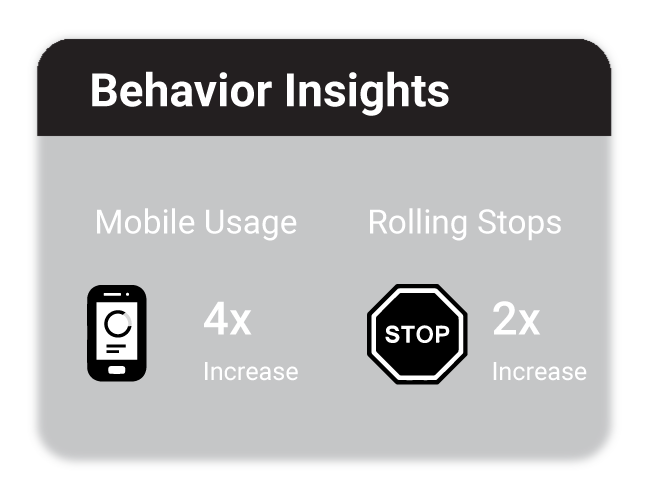
Charging session tracking
Monitor charging time, frequency, and energy delivered across vehicles
Charging efficiency insights
Identify underperforming sessions, idle charging time, and energy losses
Energy usage visibility
Track electricity consumption by vehicle, location, and time
Fleet usage analysis
Identify routes and vehicles best suited for EV adoption
Energy demand insights
Understand charging needs across locations and operations
Mixed fleet visibility
Manage EV and ICE vehicles in a unified dashboard
Energy consumption reporting
Monitor consumption across vehicles and operations
Carbon impact estimation
Measure emissions reduction from EV adoption
Audit-ready operation
Maintain structured records for internal reviews, and compliance tracking
Frequently asked questions
How can EV fleet management reduce operational costs?
EV operational costs are influenced not just by energy prices, but by how efficiently energy is used across your fleet. By tracking energy consumption, charging behavior, and vehicle utilization in one view, operators can identify inefficiencies that are often difficult to detect manually.
With better visibility, you can take action across key areas:
- Optimize charging schedules: Avoid peak-hour electricity costs and reduce unnecessary energy spend
- Reduce energy waste: Identify inefficient driving patterns and excessive consumption
- Improve fleet utilization: Ensure vehicles are deployed more effectively across routes
Over time, this leads to more predictable operating expenses and improved cost control across your fleet.
How do I know if an EV can complete its assigned route?
Range uncertainty is one of the most common operational challenges in EV fleets. The system addresses this by combining real-time vehicle data with actual operating conditions—such as driving patterns, terrain, traffic, and energy usage—to estimate available range more accurately.
SafeConnect EV Fleet helps validate trips before dispatch, ensuring vehicles are only assigned to routes they can realistically complete. This reduces the risk of mid-route disruptions and improves planning confidence across daily operations.
How does the system improve charging efficiency and reduce downtime?
Charging inefficiencies often occur due to limited visibility—such as vehicles charging at suboptimal times, remaining connected longer than necessary, or underutilizing available infrastructure.
With clearer insight into charging behavior, operators can:
- Identify inefficient charging patterns: Detect idle charging or extended plug-in durations
- Adjust charging timing: Shift charging to more efficient or cost-effective periods
- Improve charger utilization: Ensure charging points are used effectively across the fleet
This helps reduce unnecessary downtime, improve charger availability, and keep vehicles operational when needed.
Can this work with my existing EV platforms or charging infrastructure?
Yes. The system is designed to integrate with existing EV platforms and charging infrastructure, allowing you to consolidate operational data into a single view without replacing your current setup.
SafeConnect acts as a unified operational layer, bringing together vehicle, charging, and energy data—so you can manage your fleet more efficiently while continuing to use your existing tools.


Sorry, the comment form is closed at this time.