

20 Apr Fuel Monitoring System
Fuel usage by vehicle and driver


Identify inefficient patterns and assign clear fuel accountability
Trip-level fuel analysis
Compare consumption across routes, distance, and operating conditions
Cost and efficiency metrics
Track fuel cost per KM and overall fleet performance
Operational Efficiency Management
Identify fuel waste early and act before it impacts cost.
Use real operational data to detect inefficiencies such as idling and irregular consumption—so you can reduce waste and improve fleet performance.
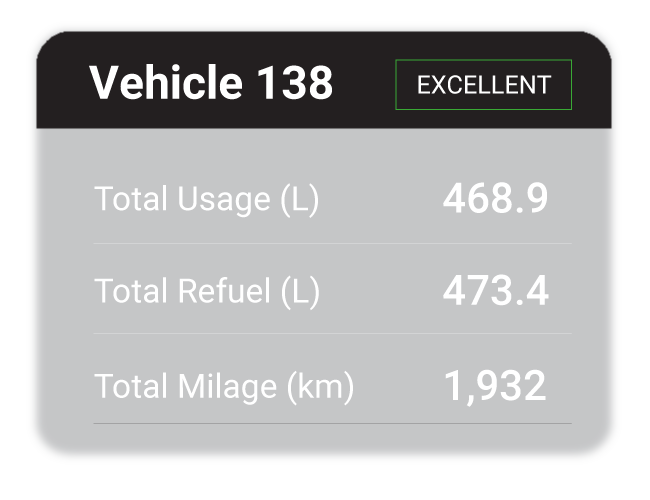
Idling cost and usage tracking
Measure fuel consumed, time spent idling, and associated cost
Fleet performance benchmarking
Compare vehicles and drivers using standardized efficiency metrics
Anomaly detection
Identify abnormal fuel usage patterns that require immediate attention
Fuel level monitoring
Detect abnormal drops in tank levels in real time
Refuel verification
Compare receipt data with actual fuel volume using system validation
Discrepancy detection
Flag mismatches between refueling, usage, and expected consumption
Fuel consumption trends
Track usage patterns across time, routes, and operations
Cost breakdown by vehicle and driver
Understand where fuel spend is concentrated
Structured reporting
Generate consistent, audit-ready fuel records
Frequently asked questions
How does a fuel monitoring system actually work?
A fuel monitoring system combines multiple data sources—such as vehicle telematics, fuel level sensors, and refueling records—to track how fuel is used across your fleet.
SafeConnect consolidates these inputs into a single operational view, allowing you to:
- Track fuel usage by vehicle, driver, and trip
- Compare actual consumption against expected usage
- Identify inefficiencies and unusual fuel patterns
This provides a continuous and structured understanding of where fuel is consumed and how it impacts operational cost.
How does the system detect fuel theft or discrepancies?
Fuel discrepancies are identified by comparing three key data points: tank level changes, refueling transactions, and expected fuel usage.
The system continuously validates fuel activity, allowing you to:
- Detect abnormal fuel drops in real time (even during non-operating hours)
- Verify refueling accuracy by comparing receipt data with actual tank volume
- Flag inconsistencies between fuel usage and expected consumption
This enables early investigation of potential fuel loss—before it becomes a recurring cost issue.
How can fuel monitoring reduce my overall fuel costs?
Fuel cost reduction comes from eliminating inefficiencies—not just tracking consumption.
By providing clear operational visibility, the system allows you to:
- Identify excessive idling, detours, and inefficient driving behavior
- Compare performance across vehicles and drivers to improve accountability
- Detect fuel loss or discrepancies that would otherwise go unnoticed
With these insights, fleet operators can take targeted actions that directly reduce unnecessary fuel spend.
Can the system integrate with fuel cards and fuel providers?
Yes. The system can integrate with fuel card programs and authorized fuel network partners—allowing you to connect fuel transactions directly with vehicle and usage data. This enables:
- Transaction validation: Match fuel card purchases with actual fuel volume in the tank
- Spending control: Monitor where, when, and how fuel is purchased
- Centralized reporting: Consolidate fuel card data and operational fuel usage in one platform
By linking fuel cards with telematics data, you gain better control over fuel spending and reduce the risk of misuse.


Sorry, the comment form is closed at this time.